


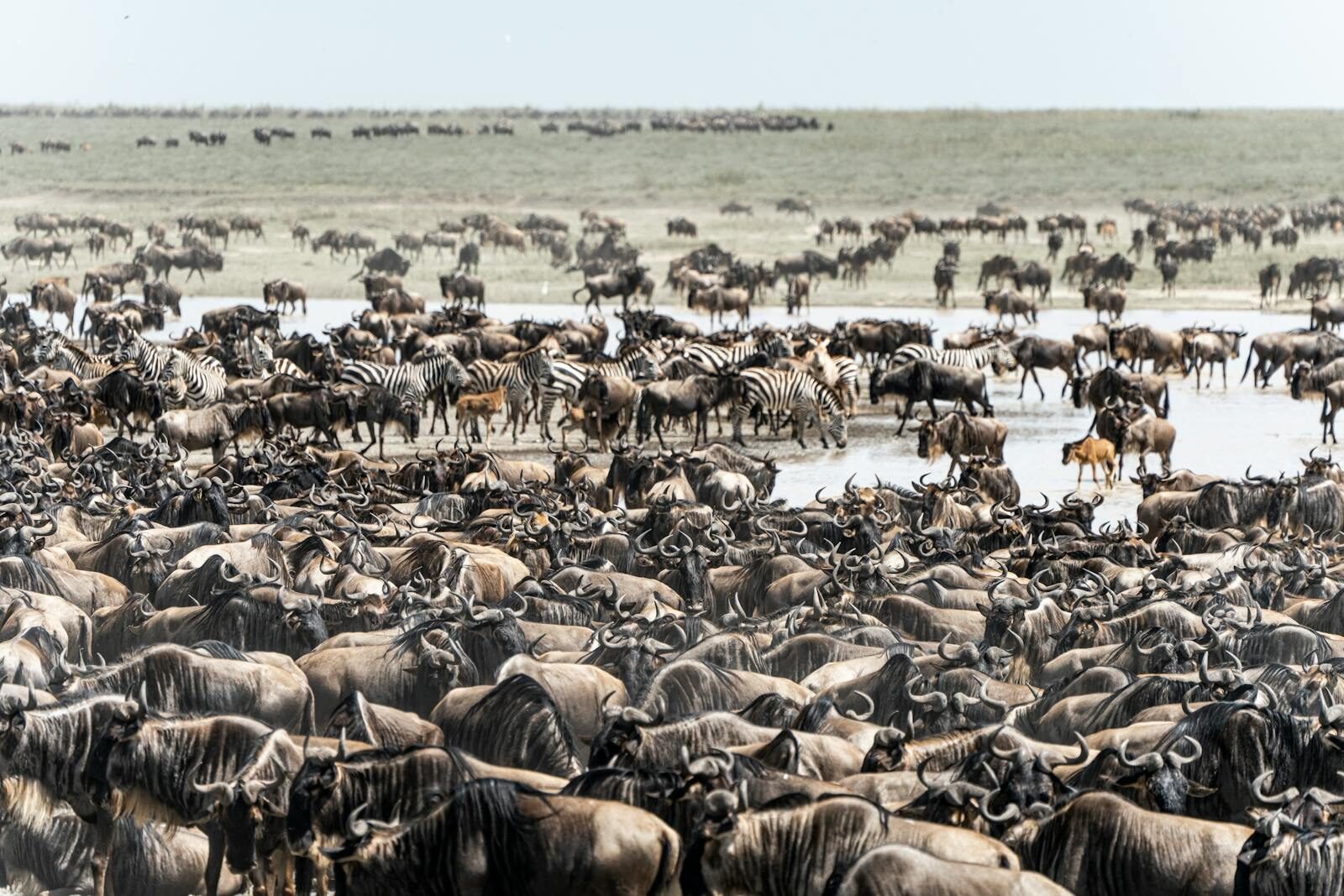
Discover where the Great Migration is every month of the year. Our complete month-by-month Serengeti migration guide helps you plan the ultimate Tanzania safari experience.
Where is the Great Migration Each Month?
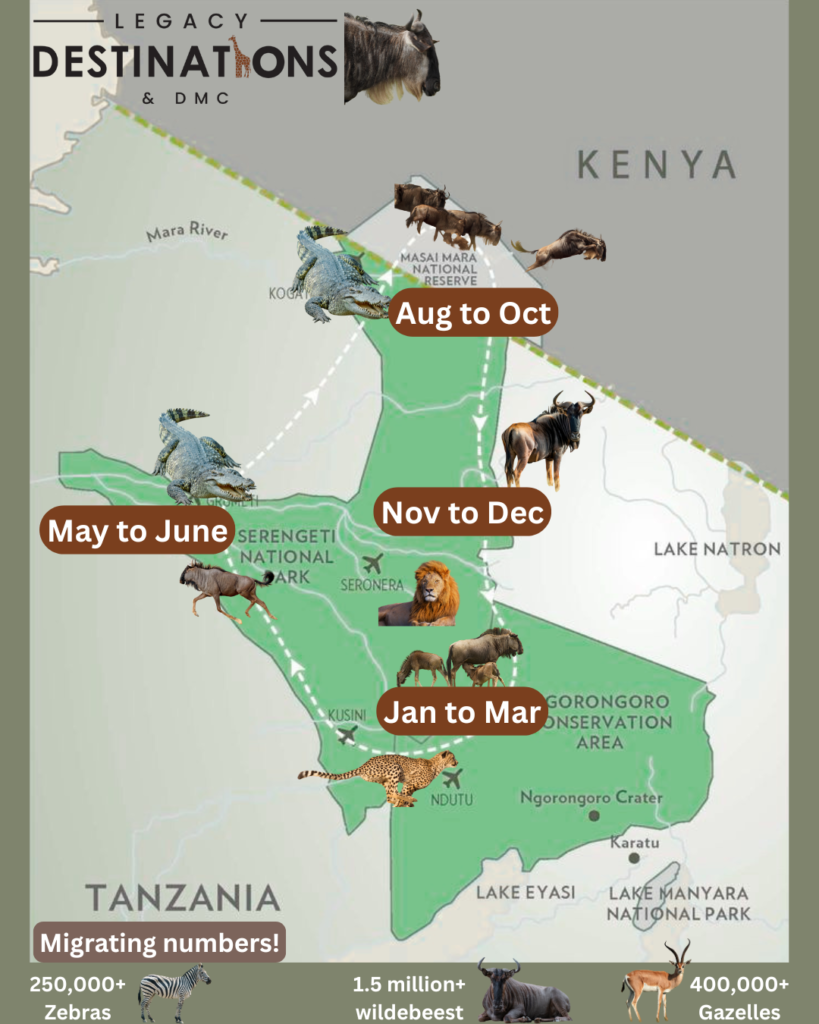
| Month | Location | Main Attraction |
|---|---|---|
| January | Southern Serengeti | Herd Gathering |
| February | Ndutu Plains | Calving Season |
| March | Southern Serengeti | Predator Action |
| April | Central Serengeti | Herd Movement |
| May | Western Corridor | Migration Columns |
| June | Grumeti Region | River Crossings |
| July | Northern Serengeti | Mara Crossings Begin |
| August | Northern Serengeti | Peak Crossings |
| September | Northern Serengeti | Prime Viewing |
| October | Northern Serengeti | Southward Movement |
| November | Central Serengeti | Following Rains |
| December | Southern Serengeti | Return to Calving Grounds |
The Great Migration is often called the greatest wildlife spectacle on Earth and for good reason. Every year, more than 1.5 million wildebeest, accompanied by hundreds of thousands of zebras and gazelles, move across the vast plains of Tanzania’s Serengeti ecosystem and Kenya’s Maasai Mara in search of fresh grazing and water.
Yet one of the most common questions travelers ask is:
“When is the best time to see the Great Migration?”
The answer may surprise you: the Great Migration is a year-round phenomenon. While dramatic river crossings receive much of the attention, every stage of the migration offers unique wildlife encounters and unforgettable safari experiences.
What Is the Great Migration?
The Great Migration is the continuous circular movement of wildebeest, zebras, gazelles, and other grazing animals through the Serengeti-Mara ecosystem.
Driven by rainfall patterns and the search for nutrient-rich grass, the animals travel approximately 800 to 1,000 kilometers annually. Along the way, they encounter predators, rivers filled with crocodiles, and challenging environmental conditions.
The migration route covers:
- Southern Serengeti
- Ndutu (Ngorongoro Conservation Area)
- Central Serengeti
- Western Corridor
- Northern Serengeti
- Maasai Mara (Kenya)
The cycle repeats every year, making it one of nature’s most remarkable events.
This comprehensive month-by-month guide explains exactly where the herds are likely to be throughout the year, what wildlife experiences to expect, and how to choose the perfect safari season.
January: Herds Gather on the Southern Plains
January marks the beginning of one of the migration’s most important phases.
The herds concentrate on the nutrient-rich short-grass plains around Ndutu and the southern Serengeti. The grass here contains high mineral content that helps pregnant wildebeest prepare for calving.
What You’ll See
- Massive wildebeest concentrations
- Zebra herds stretching to the horizon
- Lions following the migration
- Beautiful green landscapes
- Excellent photography conditions
Best For
- Wildlife photographers
- First-time safari travelers
- Families
February: The Calving Season Spectacle
February is considered one of the most extraordinary safari months in Africa.
Within just a few weeks, approximately 500,000 wildebeest calves are born.
Many newborns stand and walk within minutes of birth, a necessary adaptation for survival in predator-rich environments.
Highlights
- Thousands of births every day
- Lions, cheetahs, and hyenas hunting
- Dramatic predator-prey interactions
- Incredible photographic opportunities
Why February Is Special
Many safari experts consider calving season even more exciting than river crossings because of the constant wildlife action.
March: Predators Rule the Plains
The calves are now stronger and beginning to travel with the main herds.
Predators remain highly active as they target young and inexperienced animals.
Wildlife Highlights
- Cheetah sightings
- Lion prides with cubs
- Leopard encounters
- Abundant birdlife
March offers fewer crowds while maintaining exceptional wildlife viewing.
April: The Long Journey Begins
As rainfall patterns shift, the herds begin moving northwest.
Long columns of wildebeest stretch across the landscape, creating one of the migration’s most iconic scenes.
Safari Advantages
- Fewer tourists
- Lush scenery
- Excellent value for accommodations
- Outstanding photography
May: Endless Columns of Wildebeest
By May, migration movement becomes increasingly dramatic.
Thousands of animals move in organized lines across the Serengeti’s central regions toward the Western Corridor.
What Makes May Unique
You witness the migration itself—not just stationary herds.
This is the season of movement, purpose, and anticipation.
June: Grumeti River Crossings
June introduces the first major river obstacle: the Grumeti River.
Although less famous than the Mara River, Grumeti crossings are equally thrilling.
Expect
- Giant Nile crocodiles
- River crossing attempts
- Predator encounters
- Massive wildebeest concentrations
June is often regarded as one of Tanzania’s best-kept safari secrets.
July: Northern Serengeti Awakens
July marks the beginning of peak migration season.
The herds reach the Northern Serengeti and prepare for one of nature’s greatest challenges—the Mara River.
Why Travelers Love July
- Dry weather
- Excellent game viewing
- River crossing opportunities
- Comfortable safari conditions
August: Peak Mara River Crossing Season
For many travelers, August represents the ultimate Great Migration experience.
Thousands of wildebeest gather at riverbanks, hesitating before launching into crocodile-filled waters.
What Makes August Famous
- Dramatic river crossings
- Predator action
- Large herd concentrations
- Iconic safari photography
Patience is rewarded, as crossings can happen unexpectedly and create unforgettable memories.
September: Prime Safari Season
September continues to offer outstanding migration viewing.
The weather remains dry, visibility is excellent, and wildlife concentrations stay high.
Best Experiences
- Mara River crossings
- Predator sightings
- Luxury safari experiences
- Photography safaris
Many professional guides consider September the most balanced month for migration safaris.
October: The Return Journey Begins
As conditions change, the herds begin moving south.
Although fewer river crossings occur, wildlife viewing remains exceptional.
Highlights
- Less crowded parks
- Active predators
- Scenic landscapes
- Excellent value
November: Following the Rains
Short rains encourage fresh grass growth in central Serengeti regions.
The migration becomes more dispersed as animals spread across broader areas.
Why Visit in November?
- Lower safari rates
- Green landscapes
- Strong wildlife viewing
- Fewer vehicles
December: Back to the Southern Serengeti
The migration cycle comes full circle.
The herds return to the southern plains, preparing for another calving season.
December Highlights
- Huge herd gatherings
- Festive-season safaris
- Excellent wildlife viewing
- Beautiful green scenery
The stage is set for another remarkable year.
Best Time to See the Great Migration
The answer depends on your safari goals.
For River Crossings
- July
- August
- September
For Calving Season
- January
- February
- March
For Fewer Crowds
- April
- May
- November
For General Wildlife Viewing
- June through October
Plan Your Great Migration Safari with Legacy Destinations & DMC
The Great Migration is more than a wildlife event—it is one of the world’s last great natural spectacles.
Whether you dream of witnessing thousands of calves take their first steps on the Ndutu Plains or watching dramatic Mara River crossings in the Northern Serengeti, choosing the right timing can transform your safari experience.
At Legacy Destinations & DMC, we create tailor-made migration safaris designed around the exact location of the herds, ensuring you maximize your wildlife encounters and create memories that last a lifetime.
Contact us today to begin planning your personalized Great Migration adventure in Tanzania.
Frequently Asked Questions
How many wildebeest participate in the migration?
Approximately 1.5 million wildebeest participate each year.
Is the migration always moving?
Yes. The migration is a continuous annual cycle.
Can I see the migration entirely in Tanzania?
Absolutely. Tanzania hosts the migration for most of the year.
Which park is best for the migration?
The Serengeti National Park offers the most extensive migration experiences.
Is the migration guaranteed?
Wildlife movements depend on rainfall and environmental conditions, so exact locations vary slightly each year.
How many days should I spend on safari?
A minimum of 6–8 days is recommended for a migration-focused safari.
Is the Great Migration suitable for families?
Yes, especially during calving season and the dry season.
Which animals can I see besides wildebeest?
Lions, leopards, cheetahs, elephants, giraffes, zebras, hyenas, crocodiles, and hundreds of bird species.
Are river crossings dangerous?
Yes, they involve significant risks from crocodiles, currents, and crowd pressure.
Can I combine the migration with Zanzibar?
Yes. Many travelers enjoy a Serengeti safari followed by a beach holiday in Zanzibar.
Get your copy